A book club I was part of was inviting write-ups on the topic of AI and Literature. There were several large and serious starter prompts. The future of literature. AI’s invasion of the literary landscape. Whether AI-generated writing can even be called literature.
I ignored all of them.
What made me want to respond was a little joke at the end: “Please don’t generate your writing using AI!”. Tucked inside that joke, I feel, is an assumption I am increasingly encountering whenever AI and writing are discussed. An assumption that using AI intrinsically reduces the value or authenticity of writing. Many people do hold that assumption. And I can see why. But I disagree, and let me explain why.
There is not one way of using AI in writing any form of literature. There are at least two.
If you use AI to generate an entire piece and present it as your own thinking, then yes, that is a problem. You are outsourcing the writing and, to a large extent, the thinking. The result often reads that way too. Generic.
But that is not the only way to use AI.
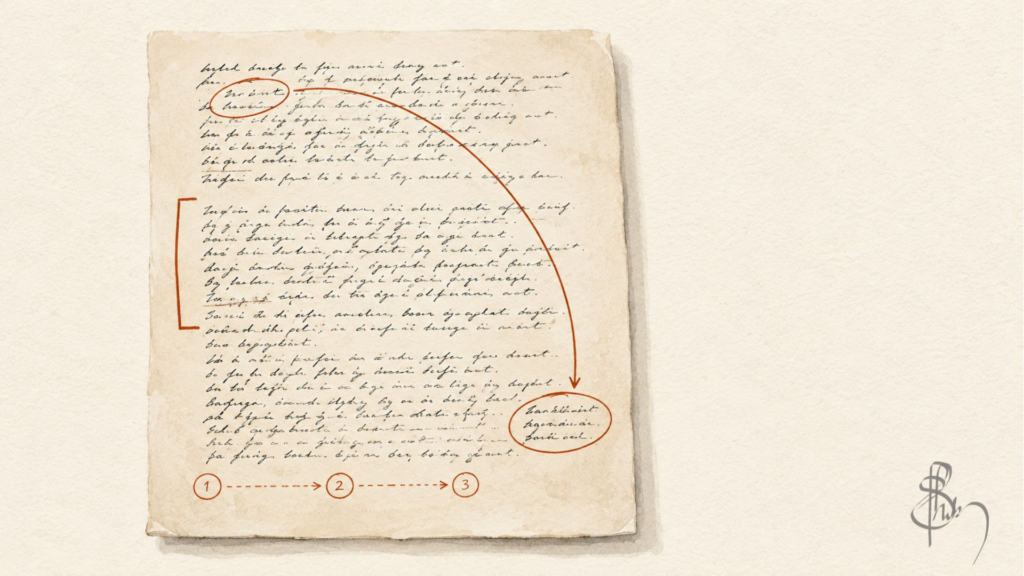
When I write, my thoughts drift. One idea leads to another, and before long I am far from where I started. If you were to read the first drafts of any of my three books, you’d suggest I find another job. This is just how I think. And how I write. Coherence, for me, and for most people, does not come before the writing. It emerges through the process of writing and rewriting, until something clear appears from the noise.
That is where AI helps. I use AI less like a writer and more like an editor. Its strength is identifying patterns. It helps me see the structure hidden inside my own meandering thoughts and reshape them into something a reader can follow. Sometimes I speak my thoughts aloud and use AI to transcribe them. Sometimes I start with rough ideas and use AI to organise them.
What you are reading right now was born from precisely that process. Not generated by AI. But written with AI.
I am not suggesting this is effortless. Finding the right balance took time. There were many attempts where the AI took over too much, and I had to bring my thoughts back. I am still learning.
What I am saying is that there are people who use AI to enhance their thinking and writing. And many who use AI to substitute for it entirely. Mostly we see the second kind. We see AI-generated blog posts, captions, and articles appearing at the click of a button, and assume that is all AI-assisted writing is. That assumption, I felt, was hiding inside the book club’s closing joke, as well as in many people’s minds.
That distinction between using AI to think and write more clearly and using AI to not think or write at all is what I wanted to bring to your attention. They are not the same. Learning the former may prove to be one of the more valuable skills in the years ahead.